Define what “cruise-free” means to you
Some travellers want to avoid large ships but are happy to take a scheduled ferry. Others prefer to stay entirely on land because of motion sickness, cost, environmental concerns or personal preference. These are different planning requirements. Decide early whether a short water crossing is acceptable, because it may determine which regions and bases are practical.
A ferry used for transport is not the same product as a multi-day cruise, but it still has an operational timetable, weather limits and its own environmental impacts. Equally, travelling by car is not automatically a lower-impact alternative in every situation. Compare the journey you will actually make, including flights, vehicle use and the number of people sharing transport, rather than attaching a simple moral label to a mode.
Choose a base before collecting attractions
Look for a settlement with accommodation, food, a realistic arrival route and at least one worthwhile activity close by. A town on a fjord does not necessarily have a continuous public path along its entire shoreline. Cliffs, private plots, industrial areas and steep terrain can interrupt access. Check the location of your lodging in relation to the stop, shop or trail you intend to use.
In western Norway, a base such as Aurland can support local exploration, but connections to other branches still need checking. In Fiordland, Te Anau has more services than the remote Milford Sound end of the road. In Iceland, a larger regional settlement can provide flexibility when weather makes an exposed drive unattractive. In Patagonia, the right base may be the one with the most reliable onward connection rather than the most striking photograph.
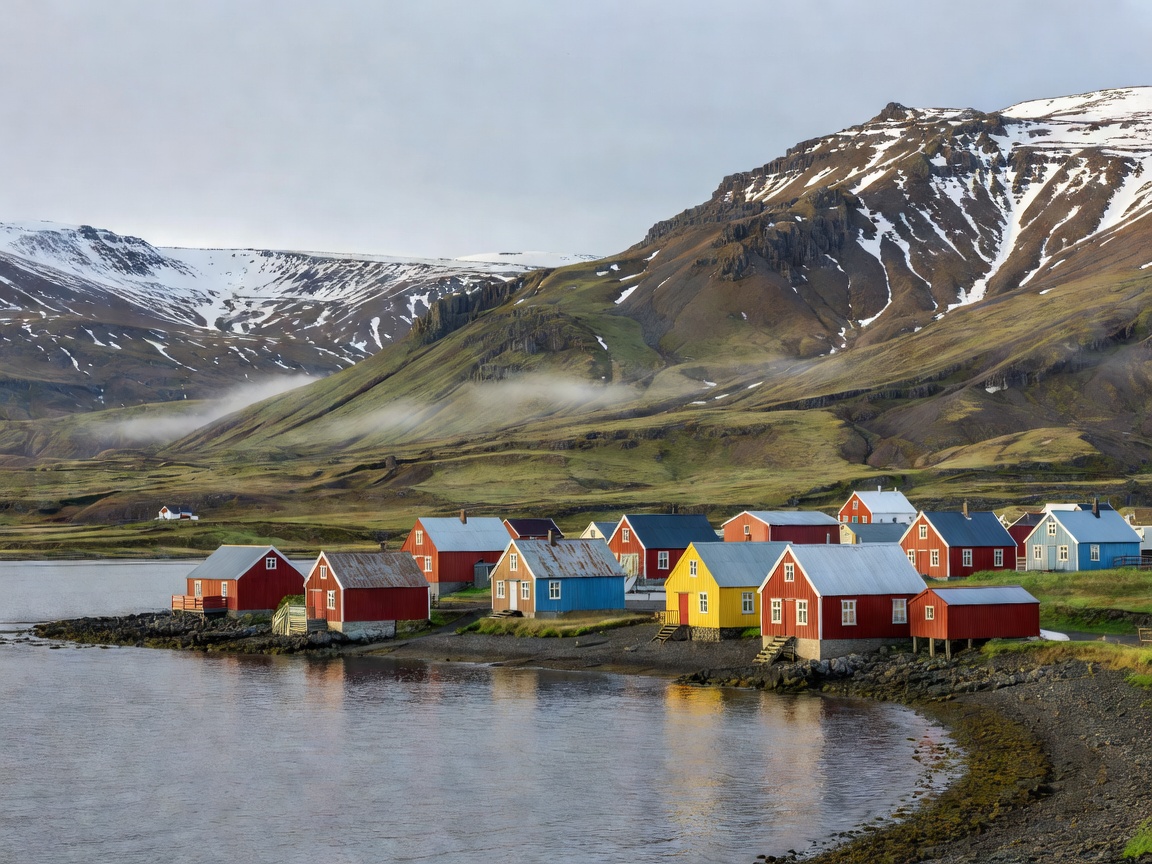
Travel at shore level
A town is more than a transfer point
A harbour walk, a local museum and the same valley seen in changing weather can make a complete day. Allow the place to become familiar before moving on.
Explore the Iceland comparison →Build the transport chain in both directions
For each excursion, check the outward and return services together. A bus that reaches a trailhead in the morning may have no suitable afternoon return, especially outside the main visitor season. Confirm which days a service runs, whether a reservation is necessary and whether the stop is actually near your destination. A place name shared by a village, a valley and a terminal can conceal a substantial walk.
If driving, include ferry queues, fuel stops, narrow roads and slower speeds on unfamiliar terrain. Do not calculate every road segment at the posted maximum. Plan where the driver can rest, and choose legal parking rather than stopping on a blind bend for a photograph. Vehicles must never obstruct access needed by residents or emergency services.
Know the strengths and limits of each option
Make room for weather rather than fighting it
A useful short stay has one principal landscape goal, one lower-exposure alternative and some unassigned time. The alternative should work under the actual forecast: a low trail is not automatically safe during flooding or rockfall conditions. Museums, village streets and indoor interpretation can offer a better day than forcing a mountain plan.
Avoid placing a remote excursion immediately before a flight or another connection you cannot miss. A weather closure is not an exceptional administrative inconvenience; it is part of travel in steep, wet coastal regions. Allow enough slack that turning back remains a genuine choice rather than an apparent threat to the whole holiday.
Independent travel works best when independence includes permission to change your mind.
Spend attention locally
Use established paths, respect closures and ask before entering working areas or private property. Buy supplies with realistic opening hours in mind, and carry rubbish back to a suitable disposal point. Quieter travel is not achieved by finding an unmarked track into a fragile place. It often comes from spending longer in a well-served settlement and reducing unnecessary movement.
Before paying for accommodation or transport, check the provider’s current terms and official local advice. This atlas does not sell bookings or verify live availability. Its role is to help you ask the right questions and build a journey whose essential parts still work when the view disappears into cloud.
Useful planning resources
Consult Entur for Norwegian public transport, SafeTravel Iceland for local safety advice, and New Zealand’s Department of Conservation for track and area alerts. Confirm individual transport services with their operators.
Find a View from Land